Paris Hilton Net Worth 2026: How She Really Built Her $300M+ Fortune
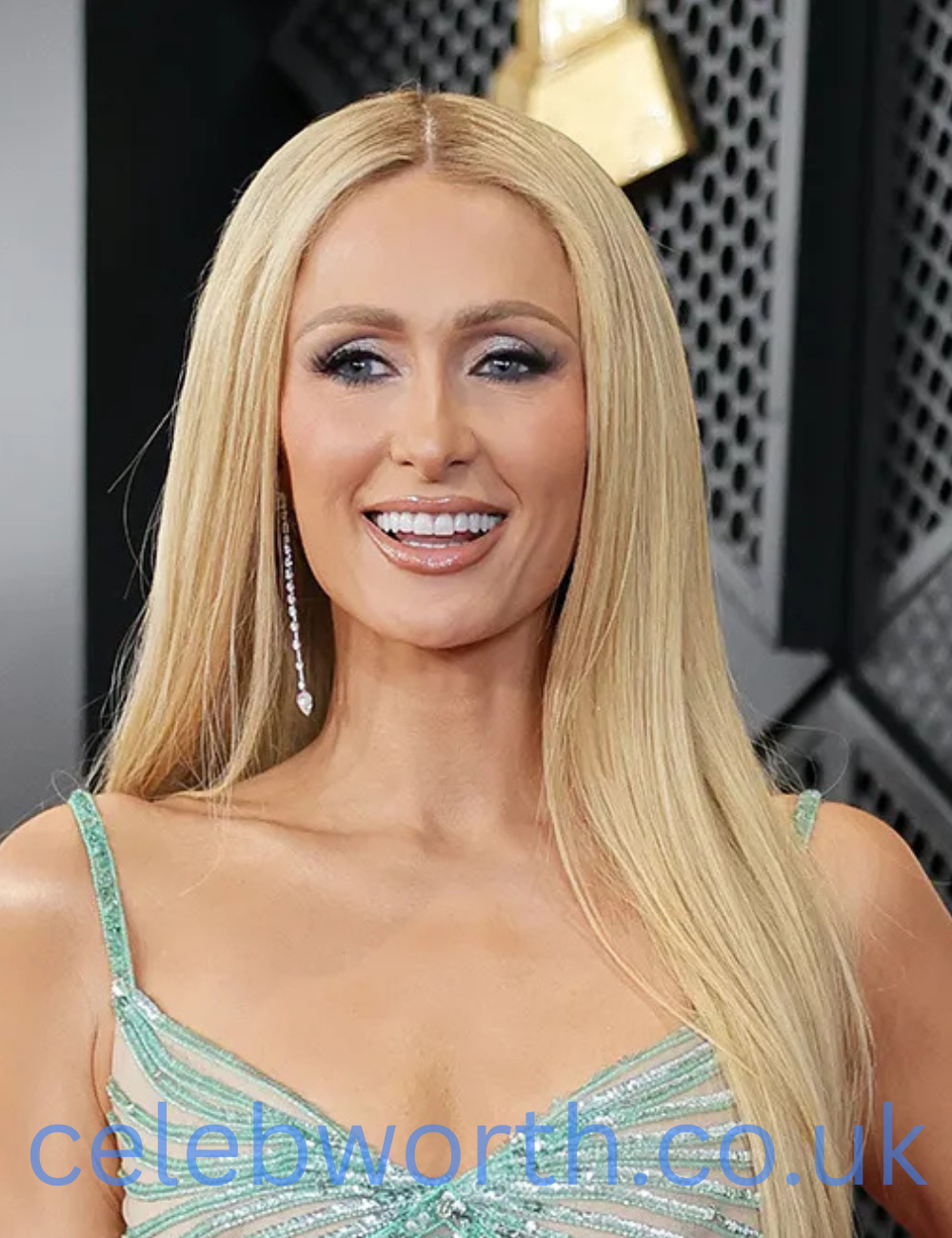
Few names carry as much cultural weight — or as much financial mystery — as Paris Hilton. For nearly two decades, the public has watched her cycle through identities: heiress, reality TV pioneer, fashion figure, DJ, entrepreneur, wife, and mother. But one question keeps resurfacing every year: how much is she actually worth, and where does that money really come from?
The short answer, as of 2026, sits somewhere between $300 million and $400 million. The longer answer is far more interesting, because this isn’t inherited money sitting quietly in a trust fund. It’s the result of one of the most calculated personal branding operations in modern celebrity history, built on fragrance royalties, DJ residencies, licensing deals, reality television, and a business instinct that most people underestimated for years because of the “dumb blonde” persona she deliberately performed on camera.
What makes her story genuinely unusual is the inheritance twist. Most assume she’s living off Hilton Hotels money. She isn’t. Her grandfather redirected the overwhelming majority of his fortune to charity in 2007, leaving her and her siblings with a fraction of what people imagine. That single decision reshaped her entire financial path and forced her to build something independent instead of coasting on a family name.
This article breaks down every layer of that empire — so by the end, you won’t need to check another source.
What Is Paris Hilton Net Worth in 2026?
As of 2026, her fortune is estimated between $300 million and $400 million, depending on which valuation model you look at. Some outlets place the figure closer to $400 million based on cumulative fragrance royalties and brand licensing income; others land closer to $300 million after accounting for the actual inheritance she received and excluding speculative revenue-share estimates.
So why the range instead of one clean number? Because unlike a public company, her income isn’t audited or disclosed. Analysts estimate it by combining:
- Royalty percentages from product lines (typically 20–30% of net profits)
- Reported DJ set fees
- Real estate holdings
- Past television and endorsement contracts
- Publicly reported business revenue from her media company
None of these figures are officially confirmed by her team, which is standard practice across celebrity wealth reporting. What’s consistent across nearly every estimate, though, is that she is not a billionaire, despite popular assumption, and her wealth is overwhelmingly self-generated rather than inherited.
Early Life and Family Background
She was born Paris Whitney Hilton on February 17, 1981, in New York City, the eldest of four children born to Richard Hilton and Kathy Hilton. Her great-grandfather was Conrad Hilton, founder of the Hilton Hotels chain, which is where the “heiress” label originates, even though she has no ownership stake in the hotel business itself.
Growing up between a suite at the Waldorf-Astoria, a home in the Hamptons, and a Beverly Hills residence, she was raised inside genuine wealth, but not the kind tied to a hotel empire she’d one day inherit. Her social circle as a teenager included Nicole Richie and Kim Kardashian, both of whom would later become central figures in her own rise to fame.
Her adolescence wasn’t smooth. She attended the Professional Children’s School before being sent to Provo Canyon School, a facility for troubled teens, an experience she has since spoken about publicly as traumatic. She later earned her GED rather than a traditional high school diploma. This period rarely gets attention in wealth breakdowns, but it matters, because much of her current advocacy work traces directly back to it.
Modeling Career and Rise to Fame
Her first real income stream wasn’t reality television. It was modeling. She began working professionally while still in elementary school and was later signed to a modeling agency, walking runways and shooting campaigns for brands like Guess and Christian Dior. By the early 2000s, she’d earned the nickname “New York’s leading It Girl,” a label that had less to do with modeling credentials and more to do with tabloid visibility.
Did modeling alone make her rich? Not even close. It built the visibility that made everything afterward possible, but the real money came later, once she understood that her image itself was the product, not any single campaign or contract.
International Stardom (2003–2007)
This four-year stretch is widely considered her commercial peak in terms of media dominance. It’s when she transitioned from “socialite who models” to a genuine global celebrity brand, appearing across international press, launching her fragrance line, and becoming one of the most photographed women on the planet.
It’s also, notably, when the foundation for nearly every long-term revenue stream she still profits from today was laid down. The perfume business, the licensing deals, the media persona — all of it traces back to this window.
The Simple Life and Reality TV Earnings
In 2003, she partnered with childhood friend Nicole Richie for “The Simple Life,” a reality show that placed two wealthy socialites into blue-collar jobs for comedic effect. The show ran for five seasons and became a defining piece of early-2000s reality television, arguably helping shape the entire genre that followed.
Reported per-season and per-episode figures for the show were never fully disclosed, but industry estimates suggest her reality television earnings across “The Simple Life,” later specials, and subsequent shows like “Paris in Love” and “Cooking With Paris” collectively total in the tens of millions over two decades. More importantly, the show is what converted tabloid notoriety into a bankable, marketable persona — the actual engine behind everything that followed.
How Paris Hilton Makes Money From Branding
Here’s where most competitor breakdowns oversimplify things. Her wealth isn’t from one job. It’s from a licensing model where her name, image, and catchphrases get attached to products manufactured and sold by other companies, while she collects a royalty on every unit sold.
Her branding portfolio spans:
- Fragrances and beauty products
- Clothing and accessories
- Handbags and footwear
- Home goods and drinkware
- Sunglasses (including a collaboration with Quay Australia)
- Retail stores carrying her name across international markets
This is a licensing empire in the truest sense, closer in structure to how a fashion house operates than how a typical celebrity endorsement works. She’s not paid a flat fee for most of these; she’s paid a percentage, which means the earnings compound the longer a product line stays on shelves.
Paris Hilton’s Perfume and Fragrance Empire
If one single business explains most of her fortune, it’s this one. Her first perfume launched in 2004, and since then she has released well over a dozen fragrances that have collectively generated more than $2 billion in gross retail revenue.
She’s widely reported to receive a royalty of roughly 20 to 30 percent of net profits on these lines, which, even conservatively calculated, places her personal take somewhere in the hundreds of millions over the life of these contracts. What makes this business genuinely durable is its international reach. American pop culture may cycle through celebrities quickly, but her perfumes have remained strong sellers across Europe, Asia, and the Middle East for over two decades, largely insulated from the ups and downs of her domestic media presence.
Trademarks and Catchphrase Licensing Deals
She trademarked several of her own signature phrases, most famously “That’s hot,” turning a verbal tic into intellectual property. This might sound minor, but it’s actually a sharp business move: trademarking a phrase prevents other brands from using it commercially without licensing it from her directly, and it reinforces the idea that her personal brand extends beyond products into language itself.
This layer of her income is smaller than the fragrance business, but it’s a good example of how deliberately she’s protected and monetized every piece of her public identity.
Paris Hilton’s DJ Career Earnings
She began DJing in the early 2010s, and by 2014, multiple industry reports named her the highest-paid female DJ in the world. Reported per-set fees for major club and festival appearances have been estimated at around $1 million, placing her among a small group of DJs, celebrity or otherwise, commanding that kind of rate.
Is that number surprising for someone many people still associate with tabloid headlines rather than turntables? Probably. But it reflects a genuine pivot into the electronic music and nightlife industry, not just a novelty act, and it’s remained a consistent income stream for over a decade.
Acting and Screen Business Ventures
Beyond reality television, she’s taken small film and scripted roles over the years, alongside producing credits. None of this rivals her fragrance or DJ income, but it adds a steady secondary layer. Her more significant screen contribution recently has been behind the camera and behind the brand, producing content through her media company rather than simply appearing in front of a camera for a paycheck.
Her 2020 documentary offered a more serious, reflective look at her life and business decisions, and a later, more personal documentary project in 2026 continued that shift, positioning her as someone actively reshaping her public narrative rather than just living inside it.
Music Career and Discography Earnings
She launched her own record label and released a self-titled debut album in 2006, followed by singles and later musical projects tied to her DJ career. Music has never been a primary income driver for her compared to fragrances or endorsements, but it reinforced her broader entertainment brand and gave her legitimate credibility within the music and nightlife industries she’d go on to profit from through DJing.
Books Written by Paris Hilton and Their Earnings
She’s authored multiple books, starting with a 2004 release co-written with an established author, which made it onto a major bestseller list despite mixed critical reviews. She followed it with additional titles over the years, including a more personal memoir released in 2023 that reframed much of her public story around resilience rather than spectacle.
Book royalties are a modest slice of her overall wealth, but they matter for a different reason: they show a consistent pattern of turning personal narrative into a monetizable product, the same strategy that runs through nearly every other business she’s built.
Cooking With Paris and TV Appearance Fees
Her cooking series became an unexpected hit, leaning into self-aware comedy rather than genuine culinary expertise, and it reintroduced her to a younger audience that hadn’t grown up watching her original reality show. Beyond this series, she continues to earn appearance fees for talk show interviews, brand events, and hosting gigs, income that, while smaller individually, adds up meaningfully across a given year.
Paris Hilton Career Earnings Breakdown
Putting the pieces together, here’s roughly how her income streams stack up in terms of long-term contribution to her overall fortune:
- Fragrance and licensing royalties: largest single contributor, estimated in the hundreds of millions cumulatively
- DJ performance fees: consistently high-value, roughly $1 million per major set
- Reality television and production: tens of millions across two decades
- Real estate appreciation: significant but tied up in property rather than liquid cash
- Books, music, and appearance fees: smaller but steady supplementary income
- Family inheritance: a relatively minor piece compared to public assumption
The pattern that emerges is clear: her wealth is diversified, self-built, and weighted almost entirely toward licensing and entertainment income rather than family money.
Costing Her Family Billions
This is one of the most misunderstood parts of her financial story, and it deserves its own space. In 2007, her grandfather made a decision that effectively rewrote the family’s inheritance structure entirely, one directly tied to his frustration with the public antics of his grandchildren at the time.
For the latest content and updates, visit our Don Baskin net worth.
Barron Hilton’s Decision to Give Away His Fortune
Barron Hilton, reportedly embarrassed by the tabloid behavior of his grandchildren, adjusted his will in 2007 to leave roughly 97 percent of his multi-billion-dollar fortune to charity through the Conrad N. Hilton Foundation, rather than to his direct descendants. Instead of dozens of family members splitting a multi-billion-dollar estate, they were left splitting a small fraction of it.
This wasn’t a quiet family footnote. It was a philanthropic decision that reshaped how an entire generation of Hiltons would inherit, or rather, not inherit, wealth.
How Much Paris Hilton Actually Inherited
Based on the restructured will, her personal share of the family estate came out to roughly $5 to $6 million, a meaningful sum by any normal standard, but a tiny fraction of what outsiders assume a “Hilton heiress” walks away with. Compare that number to her current estimated fortune of $300 to $400 million, and the math makes something obvious: the overwhelming majority of what she has today, she built herself, after that inheritance was already locked in.
Is Paris Hilton Self-Made? The Real Story
This question gets debated constantly, often alongside comparisons to other famous heirs and heiresses. The honest answer sits in the middle. She didn’t start from nothing; she started with visibility, connections, and a level of comfort most people will never have. But the specific fortune she holds today wasn’t handed to her. It was built through licensing decisions, brand deals, and two decades of consistent business execution, long after the family inheritance conversation had already been settled in a very different direction than the public assumed.
Calling her fully “self-made” ignores her starting advantages. Calling her simply an “heiress” ignores the actual business work behind the number. The realistic version acknowledges both.
Paris Hilton’s Real Estate Portfolio
Property has been a consistent theme throughout her adult life, and her real estate history reads almost like a timeline of her financial evolution:
- A Sherman Oaks residence purchased in the mid-2000s, later infamously burglarized in a string of celebrity home break-ins
- A downtown Manhattan penthouse acquired in the mid-2010s
- A Malibu oceanfront property purchased jointly with her husband, later lost in a major California wildfire
- A rented Beverly Park mansion following that loss
- Her current, and by far largest, purchase: a Beverly Hills mega-mansion acquired in 2025
Each of these moves reflects both lifestyle choices and, increasingly, strategic asset allocation rather than simple spending.
$63 Million Beverly Hills Mansion (Former Mark Wahlberg Estate)
In 2025, she and her husband purchased a roughly 30,000-square-foot Beverly Park estate, originally custom-built for actor Mark Wahlberg, for approximately $63 million. The property includes twelve bedrooms, twenty bathrooms, a private movie theater, a five-hole golf course with a driving range, a skate park, a resort-style pool, and a two-story library, sitting on roughly six acres of land.
It’s one of the largest single purchases of her life and a strong signal of how her business has matured. It’s not an impulsive celebrity buy; it’s a long-term asset purchase.
Why the Ultra-Wealthy Take Out Mortgages
Here’s the detail most people find genuinely surprising: despite being able to cover the purchase price outright, she and her husband reportedly took out a mortgage of roughly $43.75 million on the property. Why would someone worth hundreds of millions borrow money instead of paying cash?
Because for ultra-high-net-worth individuals, tying up tens of millions of dollars into a single non-liquid asset often makes less financial sense than keeping that cash invested elsewhere. A mortgage becomes a strategic tool rather than a financial burden, freeing up capital for higher-yield investments, business ventures, or simply maintaining liquidity. This same pattern shows up among other ultra-wealthy public figures who’ve financed homes despite having the cash to buy outright, treating leverage as a wealth-building lever rather than a sign of financial strain.
Paris Hilton’s Persona and Media Presence
Much of her public image was built, quite deliberately, around a “party girl heiress” caricature: exaggerated, blonde, breathy, and seemingly disconnected from serious business decisions. Catchphrases like “That’s hot” became cultural shorthand for an entire era of mid-2000s celebrity culture.
The uncomfortable truth for a lot of people who dismissed her during that period is that the persona was, by her own later admission, largely a character. Underneath it was someone actively negotiating licensing deals, managing a fragrance empire, and building long-term brand infrastructure. The gap between the public perception and the private business reality is arguably the most consistently underestimated part of her entire career.
Personal Life and Relationships
Her personal life has generated as much media coverage as her career. She was previously engaged to a Greek shipping heir and later to an actor before those relationships ended. Her most publicly discussed early relationship controversy involved an unauthorized private video from 2003 that was later distributed commercially without her consent, an incident she has since publicly reframed as an act of exploitation rather than a scandal of her own making.
She began dating venture capitalist Carter Reum in late 2019, got engaged in 2021, and married him later that same year. They welcomed a son and a daughter, both via surrogacy, in 2023.
Carter Reum Net Worth (Paris Hilton’s Husband)
Her husband, Carter Reum, built his own fortune independently as a venture capitalist and entrepreneur, co-founding a spirits brand with his brother before moving into venture investing, backing early-stage companies across technology and consumer sectors. His estimated net worth sits in the tens of millions, built through business ventures entirely separate from her fragrance or entertainment income.
Together, the couple represents two independently built fortunes rather than one spouse simply absorbing the other’s wealth.
Richard Hilton Net Worth
Her father, Richard Hilton, built his own career in real estate and hospitality investment rather than relying on the Hilton Hotels brand directly. His estimated net worth, built through decades in commercial real estate, sits well below the billion-dollar figures often associated with the broader Hilton name, reinforcing a pattern that runs through the entire family: the hotel fortune and the individual family members’ personal wealth are two very different things.
Paris Hilton’s Activism and Advocacy Work
In recent years, she’s shifted a significant portion of her public platform toward advocacy, particularly around youth rights and reforming the troubled-teen treatment industry, an issue directly tied to her own adolescent experience at a residential treatment facility. She’s testified before lawmakers on this topic and pushed for legislative reform around institutional accountability and online safety for minors.
This pivot has done something her earlier career never fully achieved: it’s repositioned her, at least partially, as a credible advocate rather than purely a tabloid figure, and it’s become a genuine part of how her current public image is discussed.
Legacy and Cultural Influence
Whatever people think of the “party girl” era, it’s hard to argue against her cultural footprint. She’s frequently credited as one of the earliest architects of modern influencer culture, monetizing personal image and lifestyle years before “influencer” was even a job title. Reality television as a genre owes a real debt to “The Simple Life,” and the personal-brand-as-business-model approach she pioneered is now standard practice across entertainment and social media.
Paris Hilton Net Worth vs Other Celebrity Heiresses
She’s frequently compared to other famous heiresses, most often Kylie Jenner, in debates over what “self-made” actually means. The comparison is useful because it highlights a broader pattern: both women started with significant advantages most people never have, and both built specific fortunes that go well beyond what family money alone would have provided. Where their stories differ is in the source: her wealth centers on legacy fragrance licensing and decades of brand-building, while more recent celebrity heiresses have leaned more heavily on social media reach and direct-to-consumer product launches.
FAQs
How much is she actually worth in 2026? Most current estimates place her net worth between $300 million and $400 million, built primarily through fragrance licensing, DJ earnings, and media ventures.
Did she inherit the Hilton Hotels fortune? No. She has no ownership stake in Hilton Hotels, and her grandfather redirected the vast majority of his personal fortune to charity in 2007, leaving her with a relatively modest inheritance compared to public assumption.
How much did she actually inherit from her family? Reports suggest her personal share came to roughly $5 to $6 million, a small fraction of the family’s original multi-billion-dollar estate.
What’s her biggest source of income? Her fragrance and beauty licensing business is widely considered the single largest contributor to her fortune, having generated over $2 billion in gross retail sales since 2004.
How much does she make as a DJ? Industry reports have placed her per-set DJ fees at around $1 million for major appearances, making her one of the highest-paid female DJs in the world.
Why did she take out a mortgage if she can afford to pay cash? Like many ultra-wealthy individuals, she and her husband reportedly financed their Beverly Hills mansion to keep cash liquid for other investments rather than tying up capital in a single asset.
Is she considered a billionaire? No. Despite the scale of her business ventures, current estimates consistently place her well below billionaire status, in the hundreds of millions rather than billions.
Conclusion
Strip away the tabloid headlines and the caricature, and what’s left is a genuinely disciplined, decades-long business story. Her fortune isn’t a hand-me-down from a hotel empire; it’s the product of a fragrance business worth billions in retail sales, a DJ career that rivals top names in electronic music, licensing deals across dozens of product categories, and real estate decisions that reflect serious long-term financial strategy rather than impulsive celebrity spending.
The inheritance twist only makes the story more compelling. Rather than inheriting a Hilton Hotels fortune, she was left with a modest sum and built nearly everything else from scratch. Whatever position you take on the “self-made” debate, one thing is clear by 2026: she’s spent over twenty years turning a personal brand into a genuine, diversified, hundreds-of-millions-dollar business, and that’s a far more interesting story than the one the headlines usually tell.
For the latest content and updates, visit our Damon Darling Net Worth.