Woody Harrelson Net Worth 2026: Shocking $80M Fortune Breakdown
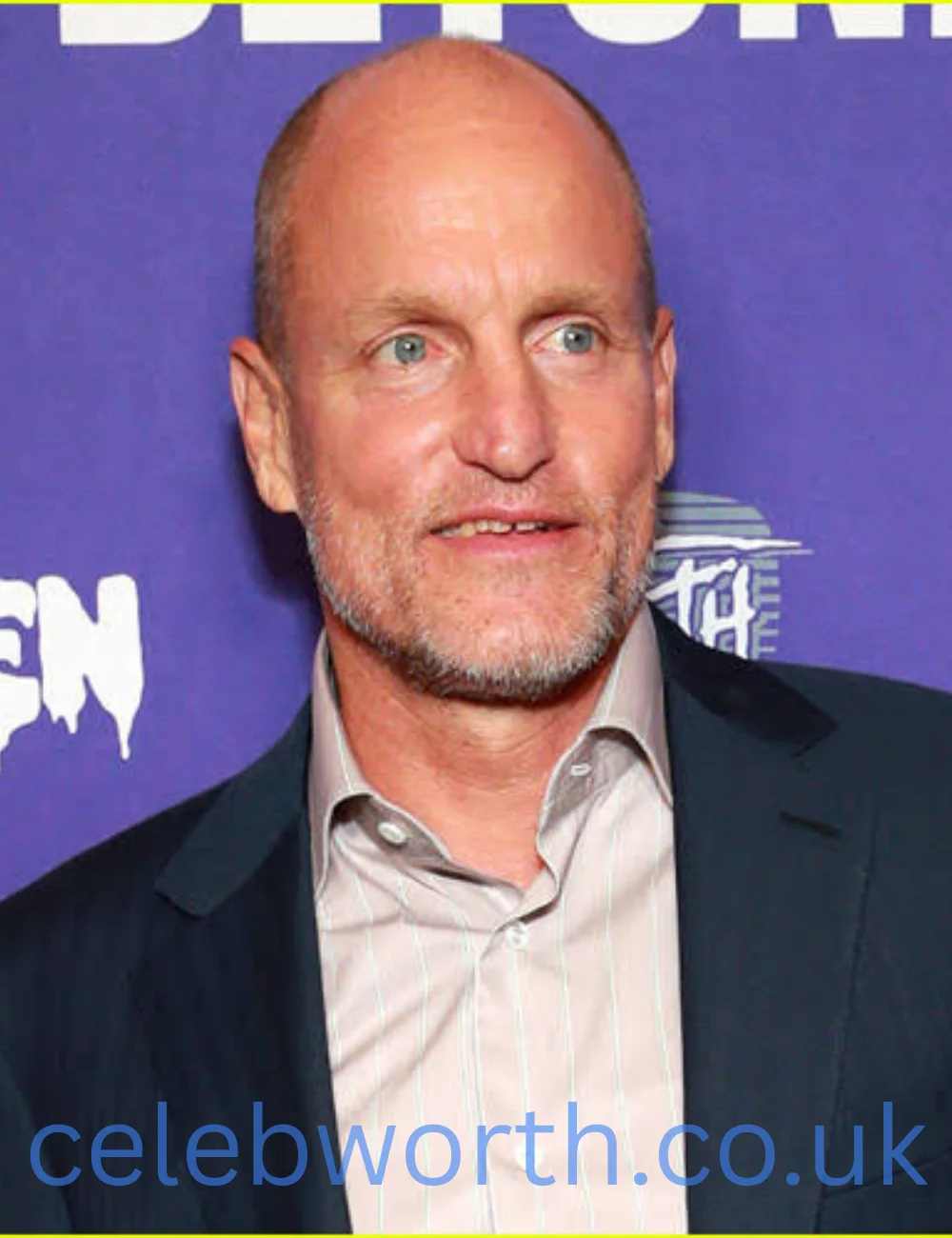
Few actors have built a career as unpredictable and enduring as Woody Harrelson. From a sitcom bartender in the 1980s to an Oscar-nominated dramatic actor, a Marvel villain, and a Star Wars smuggler, his résumé spans nearly every genre Hollywood has to offer. That range is exactly why so many people search for Woody Harrelson net worth figures every year — his income doesn’t come from one blockbuster franchise, it comes from four decades of steady, diversified work.
This guide breaks down where his money actually comes from, how much he earned on his biggest projects, what his estate and business ventures look like, and how his fortune stacks up against the actors he’s worked alongside. Every figure here is current for 2026, and nothing is left out — by the end, you’ll have the complete financial picture without needing to check another source.
Woody Harrelson Net Worth in 2026
As of 2026, Woody Harrelson’s estimated wealth sits at roughly $70 million, with a handful of financial trackers pushing that estimate as high as $80 million. Since his exact bank statements aren’t public, these numbers come from industry analysts who study his film salaries, TV paychecks, endorsement deals, and real estate over the decades.
A few things worth knowing about how that figure is calculated:
- It reflects accumulated career earnings minus taxes, living expenses, and reinvestments, not a single lump payout.
- Acting salaries are estimated from box office performance, production budgets, and comparable actor deals, since studios rarely release individual contracts.
- His net worth includes property, business stakes, and other assets, not just cash.
- Estimates vary between $70M and $80M depending on which outlet is doing the math and which recent deals they’re factoring in.
Compared to some of his ’80s sitcom peers, Harrelson sits just below the top earners from the Cheers cast, but well ahead of most character actors his age, largely because he kept working steadily in big studio films through his sixties rather than slowing down.
Early Life and Background
Woodrow Tracy Harrelson was born on July 23, 1961, in Midland, Texas. His mother, Diane, worked as a secretary, while his father, Charles, was a convicted contract killer who spent most of Woody’s childhood in prison and was later sentenced to life for the 1979 murder of a federal judge. Harrelson has said the two barely had a relationship growing up.
Raised primarily by his mother alongside his two brothers, Woody grew up in modest circumstances. The family moved to Lebanon, Ohio, in 1973, where he later graduated high school in 1979. He worked a summer job at an amusement park before heading off to Hanover College in Indiana, where he studied theater and English and graduated in 1983 — the same college years where he became friends with a fellow student who would go on to become a U.S. vice president.
This background matters for one reason: Harrelson didn’t come from money, industry connections, or a famous family. Every dollar behind his current fortune was built from scratch through acting, starting with small stage roles in New York.
How Did Woody Harrelson Get His Start?
After college, Harrelson moved to New York City chasing a theater career, not a Hollywood one. He landed an understudy role in Neil Simon’s Broadway production of Biloxi Blues, which put him in the same social circles as working actors but paid modestly.
His actual break came almost by accident. Producers were looking to replace an actor on a struggling NBC sitcom after the original cast member playing the bar’s resident “old-timer” character passed away unexpectedly. Harrelson auditioned, got the part, and joined the show in its fourth season — a decision that changed the entire trajectory of his career and, eventually, his bank account.
What’s notable is that Harrelson wasn’t initially interested in television. He’s spoken about being talked into taking the sitcom role by people around him who insisted it was a smart move, despite his own preference for theater work at the time. That single decision ended up funding the next forty years of his career.
Television Career – Cheers and Beyond
Harrelson’s television career is inseparable from Cheers, the NBC sitcom that made him a household name. He played bartender Woody Boyd from 1985 to 1993, appearing in roughly 200 episodes and earning five Emmy nominations, winning once in 1989 for Outstanding Supporting Actor in a Comedy Series.
Beyond Cheers, his TV résumé includes:
- Guest appearances as his Cheers character on Frasier and The Simpsons
- A recurring role on Will & Grace in the early 2000s
- The HBO political film Game Change, where he played strategist Steve Schmidt
- HBO’s True Detective (2014), where he starred opposite Matthew McConaughey and also served as executive producer
- HBO’s limited series White House Plumbers (2023), playing a Watergate-era intelligence officer
- Multiple hosting stints on Saturday Night Live, plus recurring cameo appearances as a former U.S. vice president
His television income built the financial foundation that let him take creative risks in film later on — including smaller, riskier independent projects that wouldn’t have been possible without a steady sitcom paycheck behind him first.
How Much Did Woody Harrelson Make for Cheers?
Exact per-episode figures from Cheers were never made public, which is typical for network sitcoms from that era. What is known is that Harrelson joined an ensemble cast during the show’s most commercially successful years, and salaries for the cast reportedly grew substantially season over season as the show became one of NBC’s biggest hits.
Among the Cheers cast, only two actors are estimated to have built larger fortunes than Harrelson in the years since — both are believed to sit around $80 million, just slightly ahead of him. That puts Harrelson comfortably in the upper tier of Cheers alumni financially, even though he wasn’t the show’s top-billed star.
The bigger financial impact of Cheers wasn’t really the weekly paycheck — it was the visibility. Landing an Oscar-nominated film role just three years after the show ended wouldn’t have happened without the name recognition Cheers gave him first.
Movie Career and Breakthrough Roles
Harrelson’s film career started while he was still on Cheers, with a small role in a 1986 football comedy. But the role that truly launched him as a serious film actor came a decade later, when he played real-life pornographer Larry Flynt in a 1996 biographical drama — a performance that earned him his first Academy Award nomination.
From there, his filmography split into two distinct lanes that have defined his earning power ever since:
- Big studio franchises — including his role as a mentor figure in a dystopian young-adult trilogy, a Marvel antihero, and a smuggler in a Star Wars spinoff — which pay large upfront salaries plus box office bonuses.
- Critically acclaimed dramas — including a Coen Brothers thriller, a black comedy that won him a second Oscar nomination, and a war satire that won the Palme d’Or — which pay less but build long-term prestige and negotiating leverage.
With more than 70 film credits, Harrelson has one of the more financially diverse filmographies among actors his age, which is a big reason his fortune has stayed stable even in years without a major blockbuster release.
Theatre Career
Long before streaming residuals or franchise paydays existed, theatre was where Harrelson cut his teeth — and it remains a part of his career he’s returned to periodically, even at the height of his film success.
His stage credits include:
- An understudy role in Neil Simon’s Biloxi Blues on Broadway in the mid-1980s
- A lead role in The Boys Next Door at a New York theatre in the late 1980s
- Playing a lead role in The Rainmaker at a Broadway theatre around 1999–2000
- Starring in a West End revival of a Tennessee Williams play in London in 2005–2006
- Writing and directing his own original play, which premiered in Minneapolis in 1999
- Writing, co-writing, and directing another original play that ran in Toronto and then Off-Broadway in 2011–2012
Theatre work pays far less than film or television, and Harrelson has never used it as a primary income source. But it’s played a role in shaping the range of performances that made him bankable in more lucrative mediums — and it shows a financial pattern worth noting: he’s consistently taken lower-paying passion projects even while his blockbuster salary could easily support avoiding them entirely.
The Hunger Games Franchise Earnings
Harrelson’s role as Haymitch Abernathy in the dystopian young-adult franchise is one of the clearest examples of how his net worth grew through franchise film work. He appeared in all four films between 2012 and 2015, playing a jaded former victor turned mentor.
While Lionsgate never officially disclosed his contract terms, industry estimates suggest he earned approximately $5 million for the first film, with that figure climbing to somewhere between $10 million and $15 million per movie by the time the series wrapped, as his character’s importance and the franchise’s box office success both grew. Added together across all four films, industry estimates put his total earnings from the franchise somewhere between $20 million and $50 million.
That range alone represents a meaningful chunk of his overall fortune, and it illustrates a pattern that shows up again and again in his career: signing onto one successful franchise early can pay dividends across multiple sequels, especially when the character becomes a fan favorite.
Venom Franchise Earnings
Harrelson’s second major franchise commitment came through Sony’s Venom films, where he plays the villain Cletus Kasady, who transforms into the symbiote Carnage. He first appeared in a brief post-credits cameo in the 2018 film before taking on a much larger role as the primary antagonist in the 2021 sequel.
Exact salary figures for the Venom films haven’t been publicly confirmed, but comparable Marvel and Sony superhero paydays for established character actors in supporting antagonist roles typically range from several million dollars per film, with additional bonuses tied to box office performance once a film crosses certain revenue thresholds. Given that both Venom films performed well commercially, it’s reasonable to assume Harrelson’s earnings from the franchise landed well into seven figures per project.
What makes this franchise notable financially is the format: a small cameo in the first film functioned almost like a paid preview, setting up a much bigger and presumably better-compensated role in the sequel — a smart long-term financial strategy for building franchise income gradually rather than all at once.
True Detective Salary and Earnings
Harrelson’s 2014 turn in HBO’s crime anthology series True Detective remains one of his most acclaimed television performances, earning him an Emmy nomination for Outstanding Lead Actor in a Drama Series. He played Louisiana detective Marty Hart across the show’s eight-episode first season, alongside Matthew McConaughey, and both actors also served as executive producers on the project.
Official salary numbers were never released, but financial analysts have compared his likely per-episode rate to other prestige HBO dramas airing around the same time, where lead actors in similarly acclaimed limited series were earning somewhere in the six-figure range per episode. Applying a comparable rate across eight episodes suggests Harrelson’s True Detective paycheck may have landed close to $800,000 to $900,000 for the season, not accounting for his additional producer fee.
Beyond the direct paycheck, True Detective mattered financially in a less obvious way — it repositioned Harrelson as a premium dramatic actor capable of leading prestige television, which opened doors to higher-paying film roles in the years that followed.
Awards and Honors
Harrelson’s trophy case reflects a career built on range rather than repetition. Over four decades, he has picked up recognition across comedy, drama, and everything in between:
- Three Academy Award nominations — Best Actor for his 1996 biographical drama role, and two Best Supporting Actor nominations for a 2009 war drama and a 2017 black comedy
- One Primetime Emmy win (plus multiple additional nominations) for his sitcom role, along with further Emmy nominations for television film and drama work
- Two Screen Actors Guild Awards as part of ensemble casts
- A BAFTA Award nomination and four Golden Globe nominations across his career
- Multiple independent film honors, including awards tied to his 2009 war drama performance
None of these awards pay Harrelson directly, but they carry real financial weight. Awards recognition consistently drives up an actor’s quote — the standard fee a studio expects to pay for that actor’s next project — which is part of why his per-film salary has climbed steadily even in years without a major box office hit.
For the latest content and updates, visit our Damon Darling Net Worth.
Has Woody Harrelson Won an Oscar?
No — despite three nominations across three decades, Harrelson has never won an Academy Award. His nominations came for a 1996 biographical drama in the Best Actor category, and for Best Supporting Actor twice more, first for a 2009 war drama and again for a 2017 black comedy that won several other major awards that season.
Being an Oscar nominee without a win still carries commercial value in Hollywood. Studios use nomination history as a form of quality assurance when negotiating salaries, and Harrelson’s three nominations across different decades signal a level of consistency that fewer working actors can claim.
Real Estate and Property Portfolio
Real estate makes up a meaningful slice of Harrelson’s overall net worth, built gradually rather than through one big purchase.
- At the peak of his Cheers fame in 1989, he purchased a mansion in Beverly Hills for roughly $1.8 million; that property is now estimated to be worth several times that amount.
- In 1999, he bought oceanfront land near Hana, on the Hawaiian island of Maui, later expanding it by purchasing surrounding parcels to create a multi-acre estate where he and his family currently live.
- In 2014, he purchased a small historic hotel property in Baltimore for roughly $4.5 million.
Unlike many celebrities who flip properties for profit, Harrelson’s real estate pattern shows long-term holding — buying land he intends to keep for decades rather than trading it for short-term gains. That approach has quietly built substantial equity, especially with the Maui property, given how dramatically Hawaiian coastal real estate values have climbed since the late 1990s.
Business Ventures and Investments
Acting income aside, Harrelson has diversified into a handful of business ventures over the years, reflecting interests he’s been vocal about for decades — particularly cannabis and sustainable living.
- He opened a cannabis dispensary in West Hollywood in 2022, entering the legal marijuana retail space he’d advocated for since the 1990s.
- In 2023, he co-launched a plant-based spirits company based in Utah, expanding into the alcohol industry with a product line aligned with his vegan lifestyle.
- Earlier in his career, he briefly owned and operated an oxygen bar in West Hollywood, an early and unconventional wellness business venture.
- He’s also been involved in environmental and sustainability-focused initiatives that blend his activism with entrepreneurial interests, including an early website encouraging environmental protest action.
These ventures aren’t likely major profit drivers compared to his film salary, but they diversify his income beyond acting — a smart move for any celebrity whose primary earning years in front of the camera won’t last forever.
Personal Life
Away from film sets, Harrelson lives a famously low-key lifestyle rooted in the same values he’s championed publicly for decades. He follows a strict raw vegan diet, avoiding meat, dairy, sugar, and flour entirely, and he’s been a long-time advocate for marijuana legalization, sitting on an advisory board for a national cannabis reform organization since the early 2000s.
He and his wife split their time primarily between Los Angeles and their longtime home on Maui, where they’ve raised their three daughters largely away from the traditional Hollywood spotlight. Harrelson has described himself as having anarchist political leanings and has been outspoken on issues ranging from war to environmental protection throughout his public life.
He’s also known for some unconventional hobbies — he’s an avid chess enthusiast who has made ceremonial opening moves at world championship matches, and he took up Brazilian jiu-jitsu later in life while filming projects.
Is Woody Harrelson Still Married?
Yes. Harrelson has been married to Laura Louie since 2008, when the couple wed at their home in Maui. The two first met back in the late 1980s, when Louie worked as his personal assistant on the set of Cheers, and they’ve been together in some form ever since, eventually marrying two decades later.
Together they have three daughters, born in 1993, 1996, and 2006. This is actually Harrelson’s second marriage — his first, to playwright Neil Simon’s daughter in 1985, was a spontaneous Tijuana wedding the couple hadn’t seriously planned, and it lasted only about ten months before ending.
Legal Issues Over the Years
Harrelson’s activism has occasionally crossed paths with the legal system, though none of these incidents have had a lasting financial impact on his career.
- In 1996, he was arrested in Kentucky after publicly planting hemp seeds as a deliberate act of civil disobedience against state marijuana laws; he was acquitted within less than an hour.
- In 2002, he was arrested in London following an incident involving a taxi that ended in a police chase; the case was resolved after he paid a settlement to the driver.
- In 2008, a photographer filed a lawsuit against him alleging an altercation outside a nightclub; prosecutors declined to press criminal charges, and the civil case was eventually dismissed.
None of these situations resulted in significant financial penalties, jail time, or damage to his earning potential — a notable contrast to how quickly legal trouble can derail some entertainment careers.
How Woody Harrelson Compares to His Co-Stars
Given how many acclaimed ensemble films Harrelson has been part of, comparing his fortune to frequent co-stars offers useful context:
- Matthew McConaughey (True Detective) has built a significantly larger fortune, driven by a broader mix of leading-man film roles and endorsement deals.
- Sam Rockwell and Michael Shannon, his co-stars from the 2017 black comedy that earned him his most recent Oscar nomination, sit in a comparable wealth range, reflecting similar career paths as respected character actors rather than box office headliners.
- Kieran Culkin, a newer-generation awards-circuit actor, has a smaller net worth so far, reflecting a shorter career timeline compared to Harrelson’s four-decade run.
- Marisa Tomei and Joseph Fiennes, both fellow veteran character actors with Oscar recognition, land in a broadly similar financial bracket, underscoring how prestige-drama actors often earn less than blockbuster leads despite critical acclaim.
The pattern across nearly all these comparisons is consistent: actors who mix prestige drama work with at least one or two studio franchises tend to land in a similar upper-middle wealth tier, well below A-list leading men but comfortably ahead of drama-only character actors.
Woody Harrelson Net Worth Growth Over the Years
Looking at his financial trajectory across decades gives a clearer picture of how gradual — rather than sudden — his wealth-building has been:
- Late 1980s: Early sitcom earnings begin building his first real savings, aided by the purchase of his first major property in Beverly Hills.
- Mid-1990s: His Oscar-nominated dramatic role marks his transition from TV paycheck to serious film salary, opening up a decade of steady studio work.
- Late 1990s–2000s: Consistent film output across comedies, dramas, and independent projects keeps income flowing, supplemented by growing real estate holdings, including his Maui estate.
- 2012–2015: The Hunger Games franchise delivers his largest single income boost to date, significantly accelerating his overall net worth growth.
- 2018–2021: The Venom franchise adds a second reliable studio paycheck source, running alongside continued prestige film and television work.
- 2022–2026: Business ventures in cannabis retail and spirits, combined with continued acting income, diversify his wealth beyond acting entirely.
This steady, multi-decade growth pattern — rather than one massive payday — is a big part of why his net worth has remained stable even in years without a headline-grabbing box office hit.
Lessons From Woody Harrelson’s Financial Journey
There’s a broader financial story in Harrelson’s career that applies well beyond Hollywood:
- Diversify your income streams. Between sitcom residuals, film franchises, prestige TV, real estate, and side businesses, no single project has ever carried his entire net worth.
- Long-term asset holding beats short-term flipping. His decades-long ownership of Beverly Hills and Maui properties has quietly built enormous equity compared to selling and rebuying.
- One breakout role can fund a decade of creative risk-taking. His sitcom paycheck gave him the financial freedom to take smaller, riskier film roles that eventually became his most celebrated work.
- Franchise commitment pays compounding returns. Both The Hunger Games and Venom show how staying loyal to one franchise across multiple installments significantly increases per-project earnings over time.
- Reputation has real financial value. Award nominations and critical acclaim don’t pay directly, but they consistently raise an actor’s future asking price.
FAQs
What is Woody Harrelson net worth? Woody Harrelson net worth is approximately $70 million as of 2026, according to most financial trackers, with some estimates placing it closer to $80 million.
When was Woody Harrelson born? He was born on July 23, 1961, in Midland, Texas.
Who is Woody Harrelson married to? He’s been married to Laura Louie since 2008. The two met in the late 1980s when she worked as his assistant on the set of his breakout sitcom.
Does Woody Harrelson have children? Yes, he has three daughters with his wife, Laura Louie, born in 1993, 1996, and 2006.
What is Woody Harrelson’s nationality? He is American, born and raised in the United States.
What movies and TV shows has Woody Harrelson appeared in? His most notable credits include a classic 1980s–90s sitcom, an Oscar-nominated 1996 biographical drama, a dystopian young-adult film franchise, a Marvel villain role across two films, a Star Wars spinoff, an HBO crime anthology series, and a black comedy that earned him his third Oscar nomination.
How did Woody Harrelson make most of his money? Primarily through decades of film and television acting salaries, supplemented by real estate appreciation and, more recently, business ventures in cannabis retail and spirits.
Is Woody Harrelson the richest actor from his generation? No — several of his frequent co-stars and contemporaries have significantly larger fortunes, though his wealth is considered solid and stable for a respected character actor with his career profile.
Conclusion
Woody Harrelson’s fortune wasn’t built on one lucky break — it’s the product of four decades of consistent, diversified work across sitcoms, blockbuster franchises, prestige drama, theatre, and business ventures. From a modest upbringing in Texas and Ohio to an estimated $70–80 million net worth today, his financial story is really a case study in longevity: keep working, keep diversifying, and let reputation compound over time. Few actors manage to stay relevant and bankable across five different decades — and that consistency, more than any single paycheck, is what’s kept his net worth climbing steadily into 2026.
For the latest content and updates, visit our Paris Hilton Net Worth.